You open Instagram and see it in someone’s story: “Grand Rising, family.” Or maybe a friend texts it to you before sunrise instead of the usual “good morning.” If you’ve paused to wonder what it actually means, you’re not alone. Grand rising has moved from spiritual circles into everyday social media captions, group chats, and casual greetings — and it carries a lot more intention than a simple hello.
This guide breaks down exactly what grand rising means, where it comes from, why people choose it over “good morning,” and how you can use the mindset behind it to shape your own mornings. No fluff, no guesswork — just a clear, well-researched look at one of the internet’s most talked-about greetings.
The Meaning Behind Grand Rising
At its heart, grand rising is a greeting used in place of “good morning.” But it’s not just a swap of words — it’s a shift in intention. Instead of simply marking the start of a new day, grand rising frames waking up as something worth celebrating.
The phrase combines two loaded words:
- Grand — meaning magnificent, elevated, or impressive
- Rising — meaning to wake up, ascend, or rise in status and energy
Put together, grand rising becomes a declaration rather than a passive greeting. It suggests that simply opening your eyes and getting out of bed is an accomplishment worth acknowledging, and that the day ahead deserves to be met with purpose rather than autopilot.
Grand Rising Definition
If you want the short, dictionary-style version: grand rising is an alternative morning greeting, often used within spiritual and wellness communities, that expresses gratitude for waking up and sets a positive, intentional tone for the day ahead.
Unlike “good morning,” which simply names the time of day, grand rising focuses on the act of awakening itself — treating it as meaningful, deliberate, and worth celebrating rather than something that just happens automatically.
This distinction matters more than it might seem at first glance. “Good morning” is a passive statement of fact — it’s morning, and you’re acknowledging it. Grand rising is active. It frames the moment you open your eyes as a personal achievement, almost like a small victory lap before the day has even started. That subtle shift in framing is exactly why the phrase resonates so strongly with people who care about intentional living.
The Linguistic and Cultural Origins of Grand Rising
Understanding where grand rising came from helps explain why it carries so much weight for the people who use it.
Cultural and Historical Context
While the individual words “grand” and “rising” are standard English, their pairing as a greeting gained popularity through African American spiritual and Afrocentric communities. Within these circles, language is treated as more than communication — it’s viewed as vibration and energy, meaning the words you choose can shape your mood, mindset, and even your day’s outcome.
One widely cited reason behind the shift away from “good morning” is the phonetic closeness between “morning” and “mourning.” Since mourning is associated with grief and loss, some spiritual practitioners intentionally avoid the word altogether, choosing “grand rising” instead to keep their language rooted in positivity rather than accidental negative association.
This mirrors a broader pattern of linguistic reform seen in some spiritual and cultural movements, where communities intentionally reshape common words and phrases to better reflect their values. Similar patterns show up in other traditions that swap familiar words for more affirming alternatives, reflecting a belief that everyday language should actively reinforce the mindset a person wants to carry.
It’s also worth understanding that this kind of intentional language reform isn’t unique to any single group. Throughout history, communities have adjusted greetings, names, and everyday phrases to reflect shifting values, reclaim identity, or move away from words carrying unwanted associations. Grand rising fits neatly into that broader tradition — a small, everyday example of language evolving alongside culture rather than staying frozen in place.
Timeline of Popularity
Grand rising didn’t appear overnight. It built momentum gradually over roughly a decade before becoming mainstream.
| Period | Milestone |
| Early 2010s | Adopted within spiritual and wellness communities as an alternative to “good morning” |
| Mid-to-late 2010s | Spread through yoga, meditation, and conscious-living circles alongside morning routines |
| 2020–2021 | Gained wider traction on Twitter, Instagram, and meme platforms; entered Urban Dictionary |
| 2020s onward | Adopted by mainstream users outside spiritual communities, appearing widely on TikTok and Instagram captions |
By the early 2020s, grand rising had crossed over from niche spiritual vocabulary into mainstream social media language, appearing in motivational posts, morning routine videos, and casual greetings between friends.
This kind of gradual spread is typical of how spiritual and cultural language moves into mainstream use. It usually starts within a tight-knit community where the phrase carries specific, deeply held meaning. From there, it slowly appears in adjacent spaces — wellness blogs, yoga studios, meditation apps — before finally reaching a much broader audience through social media, where the original depth of meaning sometimes gets flattened into a stylistic trend. Grand rising followed almost exactly that path, which is part of why you’ll find such a wide range of interpretations depending on who you ask.
The Spiritual and Metaphysical Meaning of Grand Rising
For many who use it intentionally, grand rising is far more than a trendy greeting — it’s tied to a broader spiritual worldview about consciousness, energy, and awakening.
Spiritual Symbolism of Grand Rising
In spiritual and metaphysical contexts, waking up isn’t viewed as a purely biological event. Many practitioners believe that during sleep, the subconscious mind “travels” beyond the physical body, and waking up represents a kind of return or rebirth.
Common spiritual interpretations of grand rising include:
- Awakening beyond sleep — rising not just physically, but mentally and spiritually
- Gratitude for another day — acknowledging life itself as a gift rather than a given
- Alignment with higher energy — connecting with purpose, clarity, and intention before the day’s distractions take over
- Ascension symbolism — “rising” above negativity, doubt, or unconscious habits
Sunrise itself often plays into this symbolism. Across many belief systems, sunrise represents renewal and clarity, making “rising” a natural metaphor for stepping into a fresh, conscious start rather than sleepwalking through another routine day.
It’s worth noting that grand rising isn’t tied to one specific religion. People across different spiritual backgrounds — and even those who don’t identify as religious at all — use the phrase simply because it feels more empowering and mindful than a routine “good morning.”
Some practitioners take the spiritual meaning even further, treating the greeting as a small daily prayer or affirmation rather than a message directed at another person. In this framing, saying “grand rising” upon waking becomes an act of gratitude directed inward or toward a higher power, thanking whatever force they believe in for the gift of another day, another chance, and another opportunity to grow. This personal, almost meditative use of the phrase is one reason it feels different from a typical greeting exchanged between two people — sometimes, it’s not really meant for anyone else at all.
Grand Rising vs Good Morning: Understanding the Difference
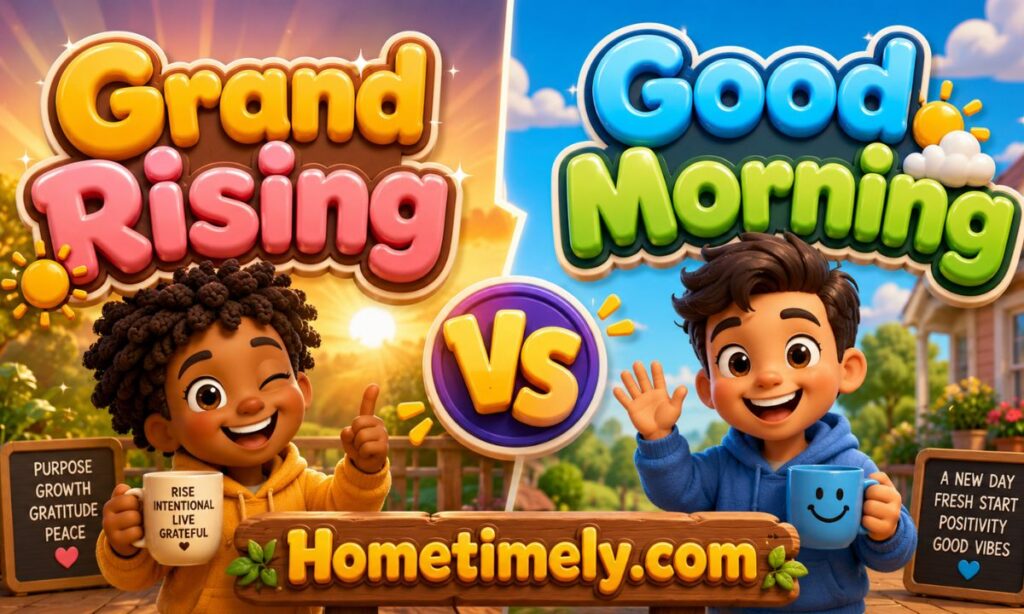
On the surface, both phrases do the same basic job: they greet someone at the start of the day. But the tone and intention behind them differ significantly.
“Good morning” is neutral and functional. It simply acknowledges the time of day without attaching any deeper meaning. It works everywhere — casual conversations, workplaces, formal emails, and greetings with strangers.
“Grand rising,” on the other hand, carries intentional weight. It’s chosen specifically to:
- Avoid the phonetic association with “mourning”
- Emphasize gratitude and awareness rather than routine
- Signal alignment with spiritual or conscious-living values
- Set an energetic tone before the day even begins
In casual, non-spiritual contexts, some people use grand rising simply because they like how it sounds or because they’ve picked it up from social media trends — without attaching deep spiritual meaning to it at all. That’s part of why the phrase means slightly different things depending on who’s saying it and where.
It also helps to think about audience and setting when deciding between the two. “Good morning” works everywhere without raising questions or requiring explanation — a coworker, a stranger, a customer service email, all of it. “Grand rising” works best among people who already share or at least understand the intention behind it, such as friends, spiritual communities, or social media followers who are used to seeing the phrase. Using it in a formal or unfamiliar setting without context might come across as confusing rather than uplifting, simply because the listener doesn’t yet share the same frame of reference.
Grand rising meaning slang
Outside of spiritual circles, grand rising has also taken on a life of its own as internet slang. On platforms like Twitter, Instagram, and TikTok, it’s frequently used as:
- A stylish, trend-aware alternative to “good morning”
- A caption for sunrise photos, workout videos, or morning routine content
- A way to signal positivity, motivation, or “high vibration” energy to followers
- Sometimes, simply a fun phrase people repeat because it’s become culturally familiar
In slang usage, the deeper spiritual meaning isn’t always front and center. Many casual users simply enjoy the upbeat, energetic feel of the phrase without necessarily connecting it to metaphysical beliefs about consciousness or sleep. This is a normal part of how slang evolves — a phrase can carry deep meaning in its original community while also being adopted more loosely elsewhere.
This dual life — deeply spiritual in one context, purely stylistic in another — is actually pretty common for language that crosses over from a specific community into mainstream slang. Words and phrases rarely travel with their full original meaning intact. Instead, they pick up new layers, get reshaped by new audiences, and sometimes lose some of their original depth along the way. Grand rising is a clear example of this process happening in real time, which is exactly why understanding its roots is so valuable before using it casually yourself.
How Language Shapes Energy and Mindset
Whether or not you subscribe to spiritual beliefs about words as vibrations, there’s real psychological backing behind the idea that language shapes mindset.
How Words Influence the Mind
The words you use — especially first thing in the morning — can influence your mood, focus, and outlook for the rest of the day. This isn’t just a spiritual claim; it aligns with well-documented psychological concepts around self-talk and framing.
- Repetition reinforces belief. Saying something positive repeatedly, like “grand rising,” can gradually shift automatic thought patterns.
- Framing changes perception. Calling something “grand” versus routine changes how your brain processes the experience.
- Intentional language reduces autopilot thinking. Choosing your words deliberately, rather than defaulting to habit, keeps you more present and aware.
This is why many mindfulness and self-development practices encourage intentional language, not because words are magic, but because consistently choosing empowering language nudges your mindset in a more positive direction over time.
Psychologists often describe this through the lens of self-talk — the internal and spoken language we use to narrate our own experience. The specific words you choose to describe a situation, including something as simple as waking up, subtly color how you feel about it. Calling the same event a “grand rising” instead of just “another Monday” isn’t changing the biological fact of waking up, but it is changing the emotional frame you’re placing around it, and that frame can influence everything from your energy levels to your patience throughout the day.
Case Study: The Language Shift Experiment
Consider a simple, real-world pattern many people have reported after switching their morning greeting from “good morning” to “grand rising” for a set period, such as 30 days.
Typical shifts people notice include:
- Increased morning awareness — pausing briefly before reaching for a phone
- Slight mood elevation — feeling more energized simply by using more energetic language
- Greater intentionality — planning the day with more purpose instead of reacting passively
- Stronger sense of gratitude — noticing small wins and blessings more consistently
While this isn’t a controlled scientific study, it reflects a well-supported psychological principle: consistent language patterns shape consistent thought patterns, which in turn influence behavior and mood.
The takeaway isn’t that everyone needs to run this exact experiment or adopt the phrase word-for-word. It’s that small, repeated changes in daily language can compound over time, much like any other habit. A single morning greeting won’t transform your life on its own, but stacked day after day, it becomes a consistent cue that nudges your mindset in a particular direction — which is really the whole point behind why grand rising resonates with so many people who practice it seriously.
Morning Rituals Inspired by Grand Rising
If the mindset behind grand rising resonates with you, you don’t need to say the phrase itself to benefit from the practice it represents. Here are four simple rituals inspired by its core philosophy.
1. Begin in Silence
Before checking your phone or speaking to anyone, spend two to five minutes in quiet stillness. This creates space to wake up mentally before external noise and notifications take over your attention.
2. Speak Daily Affirmations
Choose one or two short, present-tense affirmations and say them out loud. Examples include:
- “I rise with purpose today.”
- “I welcome this day with gratitude.”
- “I choose clarity and calm energy.”
Speaking affirmations aloud reinforces intention more effectively than simply thinking them silently.
3. Move Your Body
Even light movement — stretching, a short walk, or a few minutes of yoga — signals to your body and mind that the day has officially begun. Movement increases circulation and alertness, supporting the “rising” energy the phrase describes.
4. Practice Gratitude
Name one to three things you’re grateful for before starting your day’s tasks. This small habit shifts focus away from stress or obligation and toward appreciation, echoing the core sentiment behind grand rising itself.
Alternatives to Grand Rising

If grand rising doesn’t feel like the right fit for your voice or values, there are several other greetings that carry similar intentional energy without the specific spiritual associations:
- “Rise and shine” — a classic, lighthearted alternative
- “Blessed morning” — leans into gratitude without the phonetic wordplay
- “New day, new energy” — casual and motivational
- “Good rising” or “Great rising” — near-identical variations sometimes used interchangeably with grand rising
- Simply expanding “good morning” with intention, such as “Good morning — grateful to be here today”
The key isn’t the specific phrase you choose — it’s whether the words reflect the mindset you actually want to carry into your day.
If you’re unsure where to start, try paying attention to how different greetings actually feel when you say them out loud. Some people find that a heavier, more poetic phrase like grand rising genuinely shifts their energy, while others feel just as intentional adding a single grateful sentence after a plain “good morning.” There’s no single correct approach — the goal is simply choosing language that feels authentic rather than performative.
Grand rising meaning in love
Grand rising has also found its way into romantic contexts, particularly in texts, social media posts, and long-distance relationships. When used between partners, it often carries an extra layer of warmth and affection beyond its general spiritual meaning.
In romantic use, grand rising can express:
- Genuine excitement to start the day because the other person is part of it
- A way of saying “I’m thinking of you” before either person even leaves bed
- A shared ritual or inside language between couples who both embrace mindful or spiritual values
- A gentle way of wishing a partner strength, positivity, and good energy for the day ahead
For couples who share spiritual or wellness-oriented values, exchanging “grand rising” each morning can become a small, meaningful ritual — a quiet way of checking in and setting a positive tone together before the day’s demands begin.
This kind of shared language often does more relationship work than people expect. A consistent, personal greeting — whether it’s grand rising or any other phrase unique to a couple — creates a small daily touchpoint that says “you’re on my mind” without requiring a long message or deep conversation. Over time, these small rituals build a sense of connection and consistency, which matters just as much in long-term relationships as bigger, more obvious gestures.
Why Words Like Grand Rising Matter
It’s easy to dismiss a greeting as “just a phrase,” but the popularity of grand rising points to something bigger: a growing cultural desire for language that feels intentional rather than automatic.
Here’s why that matters:
- Language reflects values. Choosing words carefully signals what you prioritize, whether that’s positivity, spirituality, or mindfulness.
- Small rituals build bigger habits. A single intentional greeting can anchor a broader pattern of conscious living.
- Words shape shared culture. Phrases like grand rising spread because they resonate with a collective shift toward wellness-focused communication.
- Representation matters. For many who use it, grand rising also honors cultural roots and community traditions, making it more than just aesthetic language.
Whether you adopt the phrase yourself or simply understand it better now, recognizing the intention behind grand rising offers a small window into how language and mindset are deeply connected.
Also Read This : Anual or Annual: Which Spelling Is Correct?
Common Misconceptions About Grand Rising
Despite its growing popularity, several misunderstandings still surround the phrase. Here are the most common ones, cleared up.
- Misconception: Grand rising is tied to one specific religion. In reality, it’s used across various spiritual beliefs and even by non-religious people who simply appreciate the positive framing.
- Misconception: It’s just a trendy, meaningless phrase. While some casual users adopt it purely as a stylistic trend, its roots carry genuine cultural and spiritual significance for many communities.
- Misconception: Saying “good morning” is somehow wrong or negative. Grand rising isn’t a rejection of “good morning” as incorrect — it’s simply a personal or cultural preference rooted in intentional language.
- Misconception: Only spiritual people use it correctly. There’s no strict rule requiring spiritual belief to use the phrase respectfully. Understanding and appreciating its origins is what matters most.
- Misconception: It’s interchangeable with “great rising” in every context. While closely related and often used the same way, some communities use “great rising” specifically in the afternoon rather than the morning.
Reference: Cambridge Dictionary Definitions
Standard dictionaries like Cambridge Dictionary don’t yet list “grand rising” as a formal headword, since it remains primarily a cultural and slang expression rather than standardized vocabulary. However, breaking down its individual components using accepted definitions helps clarify its meaning:
- Grand is defined as large, impressive, or dignified in appearance or style.
- Rising relates to moving upward, increasing, or waking up from sleep.
Combined, these standard definitions align closely with how the phrase is used in practice — framing the act of waking up as something dignified and worth acknowledging, rather than a routine, unremarkable event.
Comparison Table
For a quick side-by-side reference, here’s how grand rising stacks up against traditional morning greetings.
| Feature | Good Morning | Grand Rising |
| Tone | Neutral, functional | Intentional, elevated |
| Origin | Standard English greeting | Spiritual and Afrocentric communities |
| Common context | Everyday, universal | Spiritual, wellness, social media |
| Underlying intention | Acknowledge time of day | Celebrate awakening and set positive energy |
| Formality | Works in all settings | Best suited to casual or spiritual settings |
Key Differences
To summarize the core distinctions in a glance:
- Good morning is universal and neutral; grand rising is intentional and value-driven.
- Good morning simply marks time; grand rising frames waking up as meaningful.
- Good morning fits every context; grand rising fits casual, spiritual, or wellness-oriented settings best.
- Good morning has no specific cultural origin; grand rising is rooted in African American spiritual and Afrocentric traditions.
Conclusion
Grand rising is far more than a trendy replacement for “good morning.” It represents a mindset — one built on gratitude, intention, and awareness at the very start of each day. Rooted in spiritual and cultural traditions that treat language as powerful and meaningful, the phrase has grown from niche wellness communities into a widely recognized greeting across social media and everyday conversation.
Whether you choose to say it yourself, adopt one of its rituals, or simply appreciate the thought behind it, grand rising offers a simple reminder: the words you choose each morning can shape more of your day than you might expect. Start with intention, and the rest tends to follow.

Michael Brook is the creator and author behind Healthy Leeks, a platform focused on grammar, writing skills, and English language learning. Passionate about clear communication and effective writing, Michael Brook shares practical grammar tips, easy-to-follow language guides, and educational content to help readers improve their English with confidence.