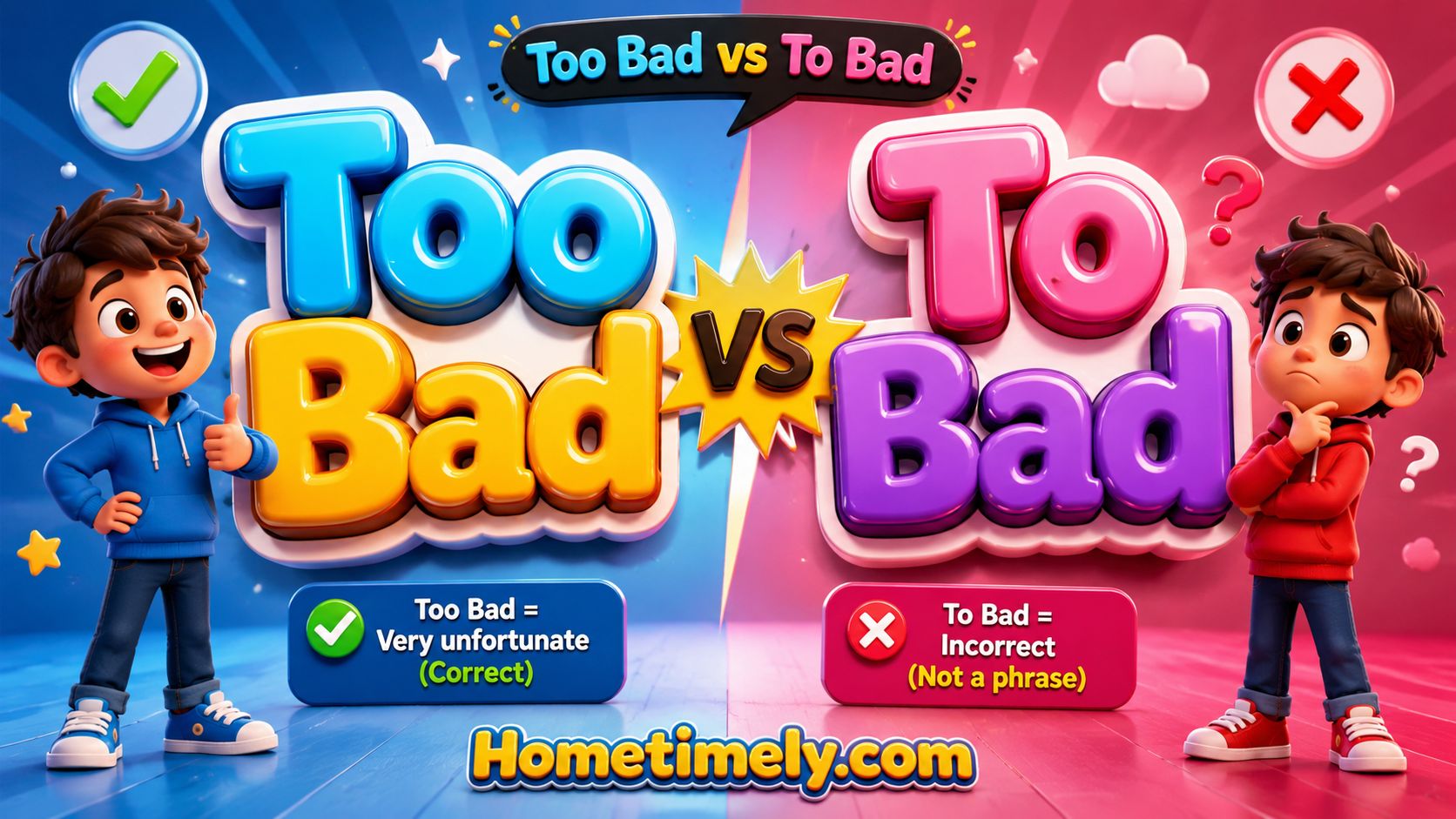
You’ve typed it a hundred times without thinking twice until autocorrect underlined it, or a coworker raised an eyebrow at your email. Is it “too bad” or “to bad”? The two look almost identical and sound exactly the same when spoken aloud, which is exactly why so many careful writers still trip over them.
The good news: the rule is simple once you see it clearly. This guide breaks down the meaning of “too bad,” explains why “to bad” almost never works, and gives you real examples, common mistakes, and a memory trick you’ll actually remember the next time you’re typing fast.
Quick Answer
“Too bad” is the correct phrase. It’s an expression used to show disappointment, regret, or sympathy as in “That’s too bad you missed the party.” “To bad” is grammatically incorrect in virtually every situation, because “to” is a preposition or infinitive marker that cannot sit directly in front of an adjective like “bad” to form this expression.
| Phrase | Correct? | Function | Example |
| Too bad | ✅ Yes | Expresses regret, sympathy, or excess | “Too bad you couldn’t come.” |
| To bad | ❌ No (almost always) | No grammatical role as a standalone phrase | “He went to bad neighborhoods.” (only correct when “to” and “bad” are unrelated words) |
What Does “Too Bad” Mean?
“Too bad” is an idiomatic expression that means something is unfortunate, disappointing, or regrettable. It’s used constantly in everyday conversation, texting, and casual writing.
Here, “too” functions as an adverb that intensifies the adjective “bad,” creating a phrase that essentially means “quite unfortunate” or “a shame.”
You’ll typically see “too bad” used in two main ways:
- As sincere sympathy: “It’s too bad you missed the concert — it was amazing.”
- As a dismissive or resigned remark: “You don’t like the plan? Too bad, we’re doing it anyway.”
The meaning shifts depending on tone, context, and delivery — something we’ll cover in more detail later in this guide.
Why “To Bad” Is Incorrect
“To bad” fails grammatically because “to” and “bad” don’t naturally combine to form a meaningful phrase. Here’s the breakdown:
- “To” is a preposition (showing direction, purpose, or relationship) or an infinitive marker (used before a verb, like “to run” or “to eat”).
- “Bad” is an adjective, describing a noun or following a linking verb.
Prepositions like “to” are generally followed by nouns, pronouns, or gerunds — not standalone adjectives used to express emotion. So “to bad” simply doesn’t have a grammatical job to do in the sentence “That’s to bad.”
The only time “to” and “bad” legitimately sit next to each other is when they’re unrelated words serving separate purposes, such as:
- “The neighborhood went to bad conditions rapidly.” (rare and awkward, but technically “to” here shows direction/change)
- “Things went from good to bad.” (comparison structure, not the idiom)
Outside of these rare structural cases, “to bad” is simply a spelling mistake — one caused by “to” and “too” being homophones.
The Difference Between “To” and “Too”
Understanding the core difference between these two words solves the confusion instantly.
- “To” is used to show direction, purpose, or as part of an infinitive verb form.
- Examples: “I’m going to the store.” / “She wants to learn Spanish.”
- “Too” means “also” or “excessively,” and it’s used to intensify adjectives or adverbs.
- Examples: “I want to come too.” / “It’s too hot outside.”
Notice the pattern: “too” always relates to excess, degree, or addition, while “to” always relates to movement, connection, or a verb’s base form. Once you internalize that distinction, choosing between “too bad” and “to bad” becomes automatic.
Grammar Rule: The Difference Between “To,” “Too,” and “Two”
Since all three words are homophones, it helps to look at them together.
| Word | Part of Speech | Meaning | Example Sentence |
| To | Preposition / infinitive marker | Direction, purpose, or connects to a verb | “I’m heading to work.” |
| Too | Adverb | Also, or excessively | “That bag is too heavy.” |
| Two | Number | The number 2 | “I bought two tickets.” |
A simple trick: if you can replace the word with “also” or “extremely” and the sentence still makes sense, you need too. If the sentence involves movement, direction, or a verb, you need to. If you’re counting something, you need two.
Real-Life Examples of “Too Bad”
Seeing the phrase in different everyday contexts makes the rule easier to remember.
- “Too bad it rained during the picnic — we had everything planned perfectly.”
- “That’s too bad about the flight delay. I hope you still make your connection.”
- “Too bad you missed the sale; the discount was huge.”
- “He said it was too bad the project got cancelled after months of work.”
- “Too bad for the home team — they lost in overtime.”
In each case, “too bad” communicates a sense of mild regret or acknowledgment of an unfortunate outcome. None of these sentences would work if you swapped in “to bad” — the sentence would instantly look like a typo.
Common Mistakes to Avoid
Even confident writers slip up here. Watch out for these frequent errors:
- Writing “to bad” out of habit. This is the most common mistake, usually caused by typing quickly or relying too heavily on autocorrect.
- Confusing “too bad” with “too badly.” “Too badly” is a different construction using an adverb, typically paired with a verb: “He wanted it too badly.” It does not mean the same thing as “too bad.”
- Overusing “too bad” in formal writing. The phrase is casual and conversational — it can feel out of place in formal reports, academic papers, or professional correspondence.
- Missing the sarcastic tone shift. Some writers use “too bad” intending sympathy, but the reader interprets it as dismissive. Context and punctuation matter.
- Skipping proofreading tools. Grammar checkers catch this error reliably, yet many writers skip the final review pass where these mistakes would be flagged.
“Too Bad” Synonyms and Alternative Expressions
If “too bad” feels too casual for your writing, or you simply want variety, here are natural alternatives:
- That’s unfortunate
- What a shame
- That’s a pity
- Such a bummer
- That’s regrettable
- Sad to hear
- What a letdown
- Tough luck
Each of these carries a slightly different tone. “What a shame” and “that’s regrettable” sound more formal, while “such a bummer” and “tough luck” lean casual — even blunt, depending on delivery.
American vs British English: Any Difference?
There’s no spelling difference between American and British English when it comes to “too bad.” Both varieties of English use the identical phrase and spelling.
That said, usage patterns can differ slightly in tone:
- American English tends to use “too bad” more casually and frequently, sometimes with a dismissive edge (“Too bad, so sad”).
- British English speakers may lean toward it in a more reserved or understated way, often favoring alternatives like “what a shame” in formal contexts.
Regardless of region, if you’re choosing between “too bad” and “to bad,” the answer stays the same everywhere English is spoken: too bad is correct.
Synonyms and Similar Expressions
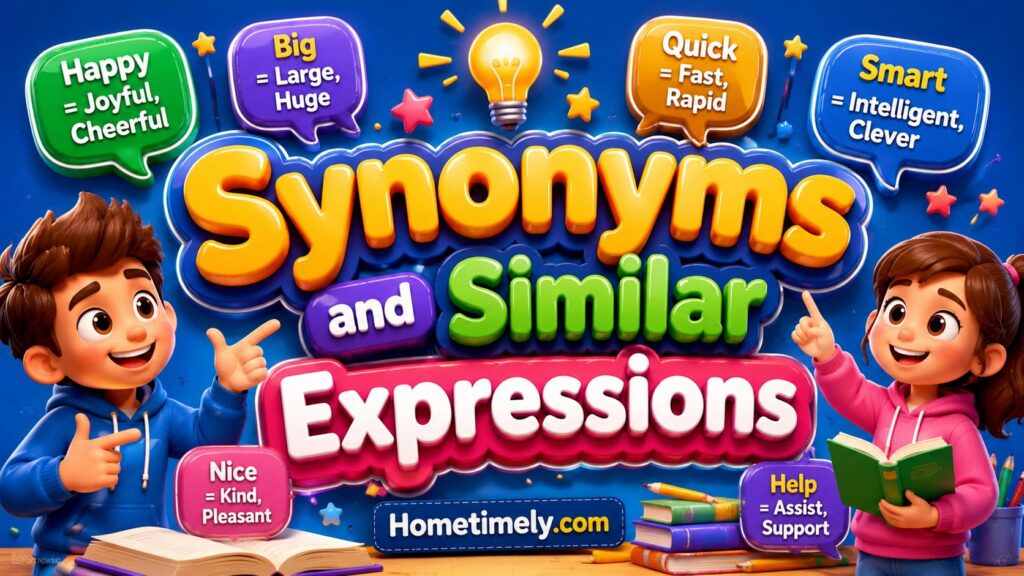
Beyond direct synonyms, several idiomatic expressions carry a similar meaning to “too bad” depending on context:
- “Oh well” — used to express resigned acceptance of a minor disappointment.
- “That’s the way it goes” — a more philosophical way to express regret.
- “C’est la vie” — a borrowed French expression meaning “that’s life,” often used with light humor.
- “No such luck” — expresses disappointment about something that didn’t happen as hoped.
These expressions aren’t perfect substitutes in every sentence, but they belong to the same family of phrases used to acknowledge unfortunate outcomes.
When “Too Bad” Can Sound Rude
Tone is everything with this phrase. While “too bad” often expresses genuine sympathy, it can also come across as dismissive or even rude depending on how it’s used.
Compare these two examples:
- Sympathetic: “Too bad you couldn’t make it — we really missed you.”
- Dismissive: “You’re upset about the schedule change? Too bad.”
The second example shows how “too bad” can shut down a conversation rather than show empathy. Writers and speakers should pay attention to:
- Punctuation: A period after “too bad” alone often reads as curt, while a fuller sentence softens the tone.
- Context: Responding to genuine hardship with a bare “too bad” can feel careless, while using it about minor inconveniences is generally fine.
- Delivery: In spoken conversation, tone of voice changes everything; in writing, word choice has to do that work instead.
If sincerity matters, consider pairing “too bad” with additional context, or opt for a warmer alternative like “I’m sorry to hear that” or “what a shame.”
Also Read This : Fairing or Faring? The Correct Difference Explained (With Easy Examples)
Memory Trick to Remember the Rule
Here’s a simple way to lock in the rule for good:
- Too has an extra “o” — think of it as adding “one more” of something, which matches its meaning of “also” or “excessively.”
- To is short and simple — it just points somewhere, like a direction on a map.
- If you can substitute the word with “very” or “extremely” and the sentence still makes sense, use too. (“That’s [very] bad” works, so it’s “too bad.”)
- If the word connects to a destination, purpose, or a verb, use to. (“Going [somewhere] the store” works only with “to.”)
Picture the second “o” in “too” as a magnifying glass — it makes things bigger, more excessive, more intense. That visual alone can save you from the mistake permanently.
Final Summary
“Too bad” is the only correct form when expressing disappointment, sympathy, or regret — no exceptions in standard American or British English. “To bad” only appears correctly in rare, unrelated sentence structures where “to” and “bad” happen to sit next to each other for entirely different grammatical reasons.
The confusion comes down to one simple cause: “to” and “too” are homophones, and it’s easy to type the wrong one when writing quickly. Remembering that “too” relates to excess (and has that telltale extra “o”) while “to” relates to direction is the fastest way to get it right every time.
Next time you’re drafting an email, a caption, or a quick text, pause for half a second before you hit send. That extra “o” is a small detail but it’s the difference between writing that looks polished and writing that looks rushed.

Michael Brook is the creator and author behind Healthy Leeks, a platform focused on grammar, writing skills, and English language learning. Passionate about clear communication and effective writing, Michael Brook shares practical grammar tips, easy-to-follow language guides, and educational content to help readers improve their English with confidence.


